
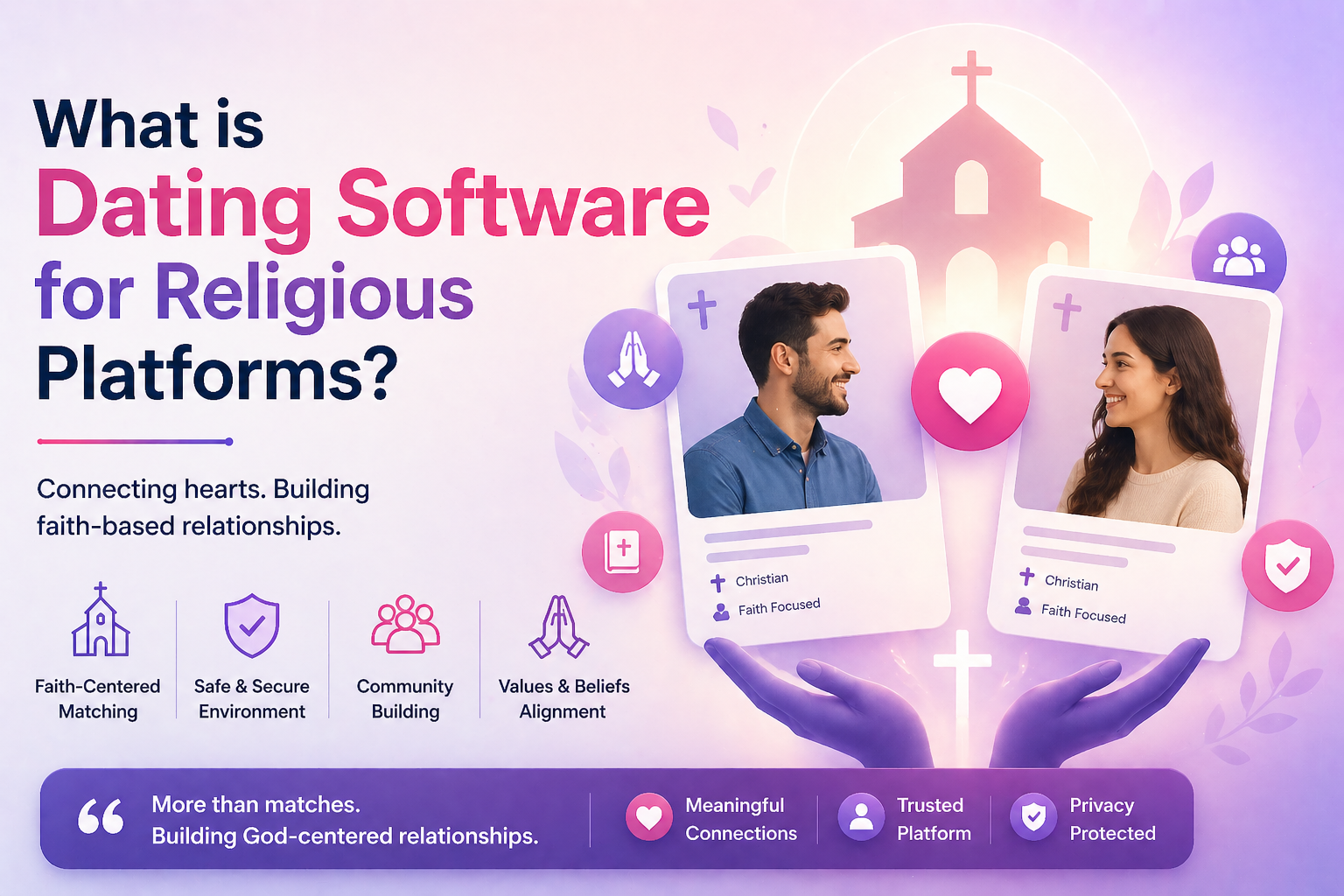
Dating Software for Religious Platforms: What to Look for in 2026
TL;DR: Religious dating platforms need the same core features as any dating site — swipe matching, real-time chat, monetization, and mobile UX — plus the ability to add faith-specific profile fields, match on religious preferences, and maintain a moderated, safe community. MooDateScript ($149 one-time) supports all of this through its admin panel and white-label customization, making it the practical choice for faith-based dating launches.
Why Religious Dating Is a Strong Niche
Faith-based dating is one of the most proven niches in the dating market:
- Christian Mingle and eHarmony built entire businesses on faith-based matching
- Users in religious communities have high intent — they’re seeking long-term partners who share their values
- Community trust is high — word-of-mouth within religious communities spreads fast
- Competition is lower than general dating — major apps don’t serve niche faiths well
- Retention is higher — shared values lead to more serious engagement
A dedicated platform for a specific faith community (Christian, Jewish, Muslim, Hindu, Buddhist, or denomination-specific) can build a loyal, engaged user base with targeted marketing and community outreach.
Features That Matter for Religious Dating Platforms
Essential Features
| Feature | Why It Matters for Religious Dating | MooDateScript |
|---|---|---|
| Custom profile fields | Denomination, practice level, prayer frequency, dietary restrictions (halal/kosher) | ✅ Admin-configurable fields |
| Match filtering by religion/denomination | Users only see matches within their faith tradition | ✅ Discovery filters configurable |
| Content moderation tools | Maintain community standards, remove inappropriate content | ✅ Full admin moderation panel |
| Photo moderation | Ensure profile photos meet community standards | ✅ Admin photo approval queue |
| White-label / custom branding | Your faith community’s identity, not a generic app | ✅ Complete white-label |
| Real-time chat | Core communication feature for any dating platform | ✅ WebSocket-powered |
| Swipe matching | Modern discovery UX users expect in 2026 | ✅ Native |
| PWA mobile app | Community members access on their phones without App Store | ✅ No App Store needed |
Nice-to-Have Features
- Icebreaker questions — faith-specific conversation starters built into the matching flow
- Community events integration — link to local religious events (services, social gatherings)
- Testimonials/success stories — display couples who met on the platform (high trust signal)
- Parental/guardian involvement option — for communities where this is culturally appropriate
- Location-based discovery — find matches in the same congregation or city
Setting Up MooDateScript for a Religious Dating Platform
Admin Panel Configuration
- Custom profile fields: Add religion, denomination, observance level, prayer habits, dietary requirements, and any denomination-specific fields through the admin panel field editor
- Discovery filters: Enable religion/denomination as a mandatory discovery filter — users only see matches within their selected faith parameters
- Content standards: Set photo moderation to manual approval — all profile photos reviewed by admin before going live
- Community guidelines: Write faith-specific guidelines in the onboarding flow using the editable welcome screens
- White-label branding: Upload your faith community’s logo, set brand colors, remove all MooDateScript branding
Profile Fields to Add
| Faith Tradition | Recommended Custom Fields |
|---|---|
| Christian | Denomination (Catholic/Baptist/Lutheran/etc.), church attendance frequency, Bible study involvement |
| Jewish | Movement (Orthodox/Conservative/Reform/Reconstructionist), Shabbat observance, kosher dietary practice |
| Muslim | Madhab/tradition, prayer frequency (5 times/daily), hijab/modest dress, halal dietary practice |
| Hindu | Regional tradition, vegetarian preference, family involvement expectations |
| General faith | Religious practice level (very observant / moderately / culturally), open to other faiths? |
Monetization for Religious Dating Platforms
Religious communities respond well to these monetization models:
- Free basic matching + premium chat — matches are free, messaging requires subscription (drives clear upgrade path)
- Modest pricing — position below Tinder/Bumble. Suggested: $9.99/month or $59.99/year. Religious audiences respond to annual plans that signal commitment
- No coins/virtual gifts by default — some faith communities find gamification inappropriate; you can disable these modules in the admin panel
- Community membership model — frame the subscription as “supporting a faith-based community” rather than transactional dating app pricing
Marketing a Religious Dating Platform
- Church/mosque/synagogue partnerships — speak at events, get mentioned in bulletins, partner with youth groups and singles ministries
- Faith community forums and Facebook groups — participate genuinely before promoting
- Clergy endorsements — a pastoral recommendation carries more weight than any ad
- Religious media advertising — faith-specific podcasts, YouTube channels, newsletters
- Content marketing — blog about faith + relationships for SEO traffic from searches like “Christian dating advice” or “Muslim marriage resources”
Frequently Asked Questions
What is the best software to build a Christian dating site?
MooDateScript is a strong choice for building a Christian dating site. It supports custom profile fields (denomination, church attendance, faith practice level), configurable discovery filters to match by denomination, full content moderation, and white-label branding. The $149 one-time license makes it affordable for community-funded launches.
Can I restrict my dating site to only one religion or denomination?
Yes — MooDateScript’s admin panel lets you configure discovery to filter by any custom profile field. Set religion/denomination as a required field and configure discovery to show only same-faith matches. You can also disable certain features (like the coins system) if they don’t fit your community’s values.
How do I keep a religious dating site safe and moderated?
MooDateScript includes a full admin moderation panel: photo approval queues, user reporting, content flagging, account suspension, and activity logs. For religious platforms, enable manual photo approval so all profile pictures are reviewed before going public. Set clear community guidelines in the onboarding flow.
Is a religious niche dating site profitable?
Yes — faith-based dating platforms have above-average retention because users share values and are seeking serious relationships. With 500 paying subscribers at $9.99/month, you generate ~$5,000/month gross. Target a specific denomination (not “all Christians”) for tighter community cohesion and faster word-of-mouth growth.
Does MooDateScript need an App Store listing for mobile users?
No. MooDateScript is a PWA — users install it on iOS and Android directly from the browser, without App Store submission. This is particularly useful for religious dating apps, which sometimes face scrutiny in App Store review due to their faith-specific targeting policies.