
The Short Answer
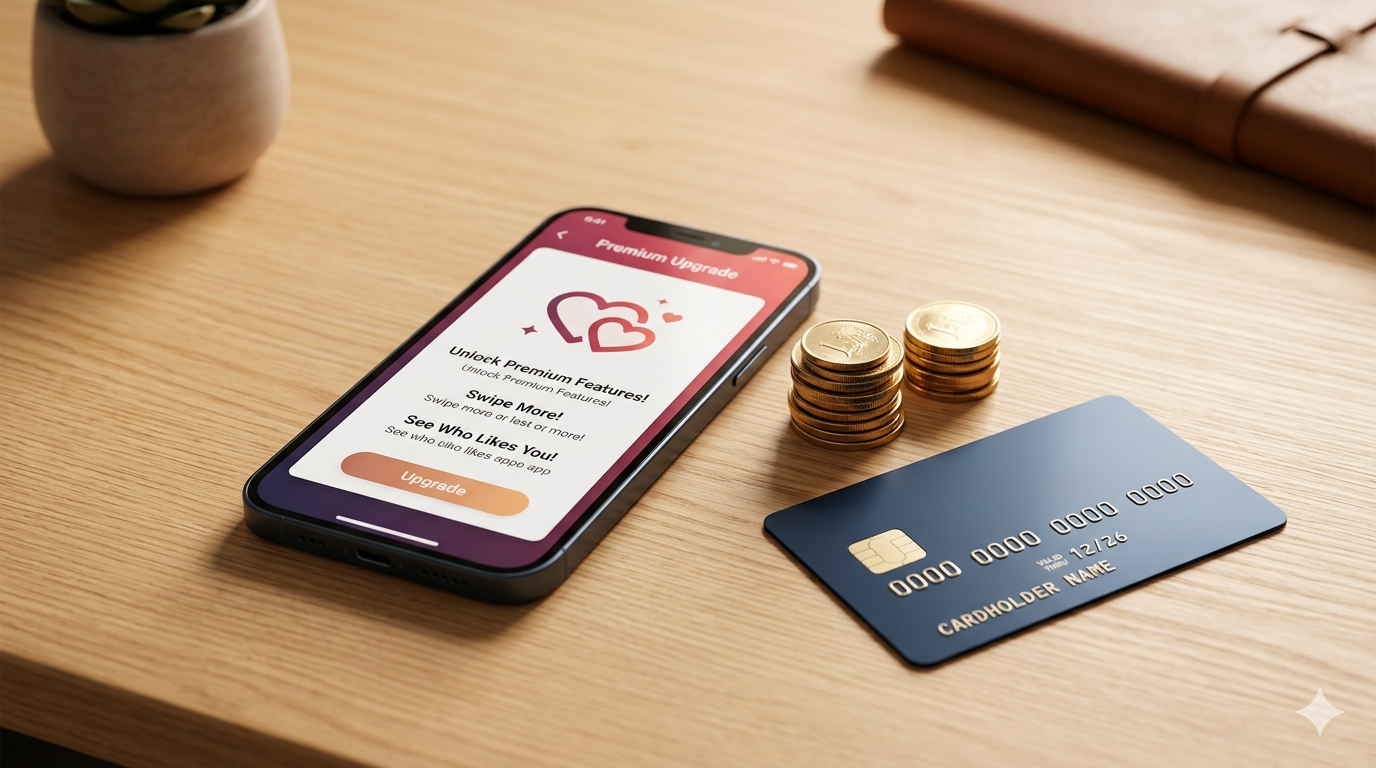
Dating apps make money by giving users a free experience good enough to stay, then charging for features that make that experience significantly better. The core business model is not access — it’s advantage. Users pay to be seen more, match faster, and communicate without limits.
The global dating app market hit $9.65 billion in 2025 and is projected to exceed $14 billion by 2030. Tinder alone generated $1.9 billion in 2023. These aren’t niche numbers — this is one of the most proven recurring-revenue models in consumer software.
If you’re building a dating website in 2026, understanding exactly how monetization works is the difference between a hobby project and a real business. Here are the six models that actually drive revenue — with the real mechanics behind each one.
Revenue Model #1: Subscription Plans (The Foundation)
Subscriptions are responsible for 60–80% of revenue on established dating platforms. Users pay a recurring monthly or annual fee to unlock a tier of features that meaningfully improves their results.
What a subscription tier typically unlocks:
- Unlimited likes/swipes — free tiers cap this at 20–100/day
- See who liked you — one of the highest-converting paywalls in dating apps
- Advanced filters (height, education, religion, distance precision)
- Unlimited messaging or message before matching
- Read receipts on messages
- Profile boosts included (1–5 free per month)
- Ad-free experience
Typical pricing in 2026:
- Monthly plan: $19.99–$39.99/month
- 6-month plan: $10–$18/month (billed every 6 months)
- Annual plan: $6.67–$12/month (billed annually)
The annual plan is where margins live. A user paying $79/year costs the same to serve as a user paying $19.99/month — but the annual plan user has committed for 12 months at once, reducing churn dramatically.
Why it works: The “see who liked you” paywall is psychologically powerful. Users know there are people interested in them — they just can’t see who without paying. Conversion rates on this single feature regularly exceed 15–25% of active users.
Revenue Model #2: Credits and Pay-Per-Action
The credit model lets users buy virtual currency and spend it on specific high-value actions. It’s especially effective for niche dating apps where users are highly motivated but may not want a recurring subscription.
Common credit-gated actions:
- Send a message to a non-match: 5–15 credits
- Video call initiation: 10–20 credits/session or per minute
- Send a virtual gift: 5–50 credits depending on gift type
- Unlock a profile photo album: 10–20 credits
- Priority placement in search: 20–50 credits/day
Credit bundles are typically priced to create a “sweet spot” where the medium bundle feels like the most rational choice:
- Small bundle: 100 credits for $9.99
- Medium bundle: 500 credits for $29.99 (best value messaging)
- Large bundle: 1,500 credits for $69.99
Why credits outperform subscriptions for certain niches: In markets where one gender (typically men) is willing to spend to contact specific users, pay-per-action monetizes intent at the moment of maximum motivation. The cost-per-message model is also easier to justify psychologically — “I’m paying to talk to her” rather than paying for a platform.
Revenue Model #3: Profile Boosts and Visibility Features
Boosts temporarily push a profile to the top of discovery queues, dramatically increasing exposure for a limited window (typically 30 minutes to 24 hours). This is pure monetization of urgency — and it converts exceptionally well.
How boosts work in practice:
- Standard boost: 30-minute window, 10x normal visibility, $1.99–$3.99
- Super boost: 3-hour window, 100x normal visibility, $14.99–$29.99
- Peak-time boost: activates automatically at highest-traffic hours, premium pricing
Platform data consistently shows that a single 30-minute boost generates as many profile views as 12 hours of organic presence. Users who see results from a boost become repeat buyers — the feedback loop (boost → more matches → buy another boost) is one of the strongest monetization cycles in consumer apps.
The “Top Picks” and “Spotlight” variants take this further: for a fee, your profile appears in a curated “featured” section shown to all users who open the app that day, regardless of matching algorithm.
Revenue Model #4: À La Carte Premium Features
Beyond subscriptions and boosts, individual premium features can be sold as one-time unlocks or daily/weekly add-ons:
- Super Like / Super Yes: Notify a user that you’re especially interested before they swipe on you. Tinder charges $0.99–$2.99 per Super Like (5–10 at a time). Conversion to match is 3x higher than a regular like.
- Rewind / Undo: Take back a left swipe. Simple but highly effective paywall for active users who swipe quickly.
- Incognito / invisible browsing: Browse profiles without appearing in their visitor list. Popular with users who don’t want their activity visible.
- Profile verification badge: Some platforms monetize trust — a verified badge signals real identity and increases match rates. Can be a subscription perk or a one-time $4.99–$9.99 unlock.
- Read receipts: Know when your messages are read. Low-cost add-on ($1.99–$4.99/month) with strong conversion because it removes emotional uncertainty.
These features work best as subscription perks that justify upgrade decisions, or as individual purchases that capture impulse spending when a user is highly engaged with a specific conversation.
Revenue Model #5: Advertising and Sponsored Content
Advertising is most relevant for free-tier users and apps with large audiences. Direct advertising on a standalone dating platform typically generates 10–20% of total revenue — meaningful but not the core engine.
Ad formats that work in dating apps:
- Native card ads: Appear between profiles in the swipe stack, designed to look like profiles. CPM of $8–$25 depending on demographic targeting.
- Sponsored profiles: Brands (florists, restaurants, event companies) pay for profile-like cards that show up in discovery. Common around Valentine’s Day, holidays.
- Banner ads in inbox: Lower CPM ($2–$5) but high visibility since users check messages frequently.
- Rewarded video ads: Users watch a 30-second video in exchange for credits or a free boost. This monetizes non-paying users while keeping them engaged.
The more important advertising play for dating platform owners is affiliate partnerships — florists, gift delivery services, event ticketing, and wedding vendors will pay $15–$60 per referral for engaged users in the right demographic.
Revenue Model #6: White-Label Licensing and B2B Revenue
This model is underused by most dating app founders but is one of the highest-margin opportunities available. If you’ve built a solid dating platform, other entrepreneurs will pay to use it. White-label dating software licenses generate revenue from:
- One-time licensing fee: $149–$999 for full source code access
- Setup and customization services: $500–$5,000 for installation, branding, and niche configuration
- Ongoing support plans: $49–$199/month for updates, security patches, and technical support
- Revenue share: Some white-label providers take 5–15% of subscriber revenue in exchange for a lower upfront license fee
This is exactly how MooDatingScript operates — founders license a PHP dating script once for $149, own the full source code, and keep 100% of the revenue from their own subscribers, boosts, and credit sales. The platform operator captures all six monetization models above from day one, without building any infrastructure from scratch.
How to Choose the Right Model for Your Dating App
If you’re launching a mainstream dating app
Lead with freemium + subscription. Give enough free value to build your user base, then gate “see who liked you” and unlimited messaging behind a $14.99–$24.99/month subscription. Don’t add credits until you have 10,000+ MAU — the complexity isn’t worth it at small scale.
If you’re building a niche dating app
Credits + subscriptions work well together. Niche users are more motivated and have higher willingness to pay per interaction. A niche dating platform for farmers, seniors, or a specific religious community can charge $29.99–$49.99/month for premium access and sustain that with a smaller but more committed user base.
If you want low-risk recurring revenue from day one
Consider the platform business: license your software to other operators rather than (or in addition to) running a consumer dating app yourself. White-label revenue is predictable, doesn’t depend on consumer marketing spend, and scales with your product quality rather than your ad budget.
Real Revenue Benchmarks
| Platform | 2023/2024 Revenue | Primary Model | Paying Users |
|---|---|---|---|
| Tinder (Match Group) | $1.9B | Subscription + À la carte | ~10.9M |
| Bumble | $903M | Subscription | ~2.5M |
| Hinge | ~$400M est. | Subscription + boosts | ~1.5M |
| eHarmony | ~$250M est. | Premium subscription only | ~750K |
| Niche app (avg top 10%) | $500K–$5M | Subscription + credits | 5K–50K |
The takeaway: you don’t need Tinder scale to build a profitable dating business. A niche platform with 5,000 paying subscribers at $19.99/month generates $1.2 million in annual recurring revenue. With startup costs under $1,500 using a dating script, the ROI mathematics are compelling.
The Biggest Monetization Mistakes (And How to Avoid Them)
1. Paywalling messaging before you have match density. If users can’t message freely until you’ve built a large enough user base, they leave before the network effect kicks in. Keep messaging free until you hit critical mass in each geographic market.
2. Too many paywalls at once. Apps that gate swipes, messaging, profile views, AND filters simultaneously feel like ATMs rather than dating platforms. Pick one primary monetization gate and do it well.
3. Making the free tier feel broken. The free tier should feel genuinely useful — just slower and less powerful than premium. If free users can’t get any matches at all, they don’t stay long enough to consider paying.
4. Ignoring annual plan pricing. Monthly subscriptions have 40–60% annual churn. Annual plans have 15–25% churn. Price your annual plan at 40–50% of the monthly equivalent and push it hard — it’s the single highest-impact change most dating apps can make to their revenue.
5. Launching with ads before you have engagement. Ads in a low-engagement app train users to think of the app as low-quality. Don’t monetize with ads until you have strong retention metrics.